There’s a specific kind of exhaustion that comes with being a teenager that nobody names properly.
It’s not from studying. It’s not from sports practice or tuition classes, It’s the exhaustion of constantly trying to be the version of yourself that keeps everyone around you happy.
And right in the middle of all that performing, a quiet question shows up: who actually am I?
If you’re trying to figure out how to find your identity as a teenager, the first step is to stop pleasing people, you cannot make everyone happy and to be honest you need NOT make ANYONE HAPPY.
Why Teenagers Feel Confused About Who They Are
Everyone rushes you toward a finished identity while your brain is literally still building itself.
Psychologist Erik Erikson found that the teenage years, roughly 12 to 18, are the exact stage where humans are wired to wrestle with this.
He called it Identity vs. Role Confusion.
Not a phase your relatives will joke about at dinner. A real, documented developmental stage that almost every person alive has gone through.
Around 8 in 10 teenagers experience some form of identity crisis before they finish adolescence. The confusion is not a flaw.
It’s the work of becoming a person. It just feels like failure because nobody told you it was supposed to happen.
And then there’s the comparison. That one classmate who already knows they want to be a doctor. Your cousin who seems to have their whole personality sorted at 16.
The influencer your age who has 200k followers and a “personal brand.”
But, they have gone through this crisis as well; it’s just their path was shorter.
Not better. Not richer. Just shorter. And a shorter path means fewer things learned, fewer walls broken through, fewer versions of yourself discovered.
If your path is long and winding, you are not behind. You are learning more. God always has a plan, and sometimes the longer road is the one that builds you into something the short road never could have.
What Identity Formation Actually Looks Like
There is no single moment where everything clicks and you suddenly know yourself. That’s a movie thing.
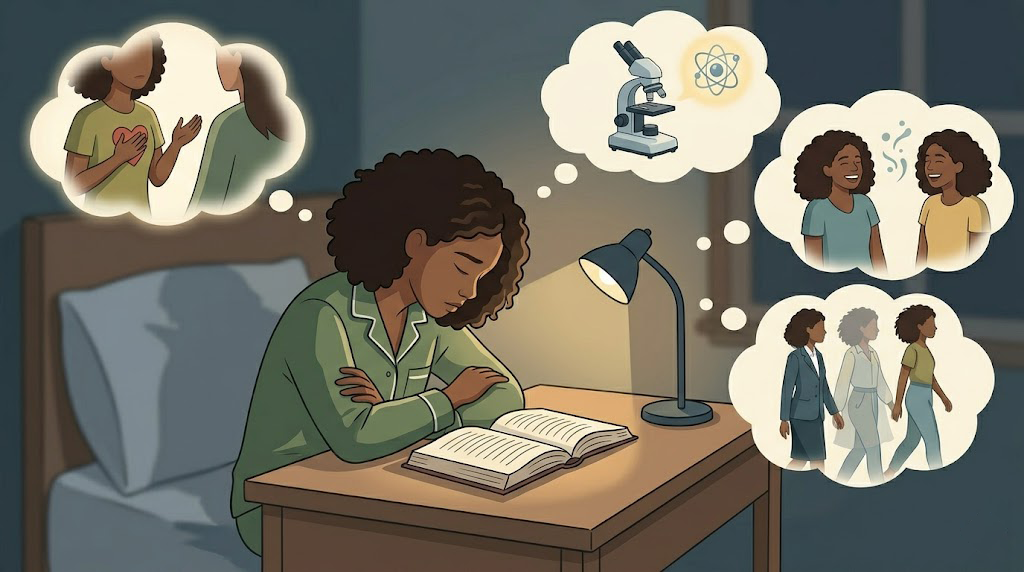
Real teen personal identity is built slowly, across hundreds of small moments you won’t even remember choosing.
The book that kept you up past midnight when you had a 6am school day.
The fight where you surprised yourself by how much you cared. The subject you thought you’d hate but secretly looked forward to every week.
The friend who made you feel like you could breathe. The moment you stayed quiet about something and felt hollow about it for three days after.
That is all identity data. That is all you, teaching yourself who you are.
Erikson also described something called psychological moratorium, a window where teenagers try on different versions of themselves before anything sticks.
That is not being fake. That is the actual process.
You are supposed to contradict yourself, change your mind, outgrow versions of yourself that felt real six months ago.
The problem is nobody tells you that this is allowed. So every change feels like instability instead of growth.
Moving Beyond Labels: Student, Topper, Introvert
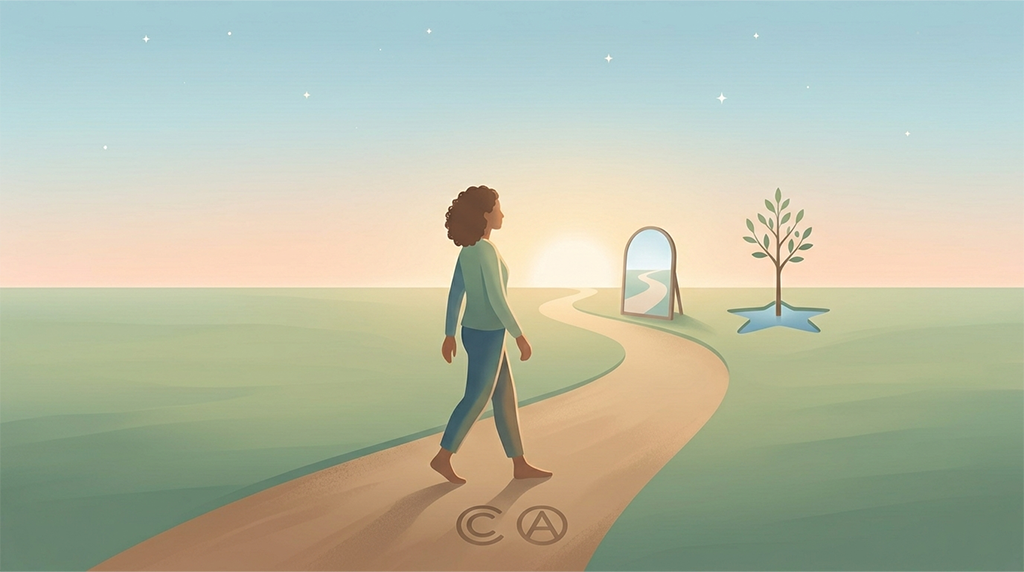
Labels feel safe. They give people a shortcut to understand you. But the moment you start believing the label is you, it becomes a cage with your own name on it.
The “topper” stops letting themselves fail at things, which means they stop taking risks.
The “introvert” stops entering rooms that could genuinely grow them.
The “chill one” stops asking for things they actually want because it breaks the image.
Individuality for teens doesn’t come from picking the right label. It comes from understanding what lives underneath the label.
Not what you do, but why it feels right when you do it. Not what you avoid, but what that avoidance is quietly protecting.
A teenager who understands this is building emotional intelligence, the ability to read their own inner world clearly.
That skill outlasts every exam result. If you want to go deeper, read our blog on Emotional Intelligence for Students: The Skill That Outlasts Every Exam next.
Questions to Ask Yourself That Spark Self-Discovery
Self-discovery for teenagers doesn’t need a retreat or a mentor or a personality test. It needs five minutes of honest, slightly uncomfortable thinking.
What makes you forget to check your phone? Not what you think should interest you. What actually swallows your attention without asking. That is a real signal about how to find your identity as a teenager, because your brain doesn’t fake absorption.
When did you last feel proud of yourself and nobody else knew? Private pride is the clearest kind. It shows you what you value when approval isn’t on the table.
Who do you become quieter around, and why? You shrink yourself in certain spaces. Noticing which ones tell you exactly where you don’t feel safe being yourself, which is just as useful as knowing where you are.
Write these down, even in broken half-sentences and tear- stained sheets.
Research in developmental psychology shows that teens who reflect on their own experiences build a clearer sense of identity faster than those who don’t.
When you write, vague feelings become words. Words are always easier to feel.
How Creative Expression Helps You Find Your Voice
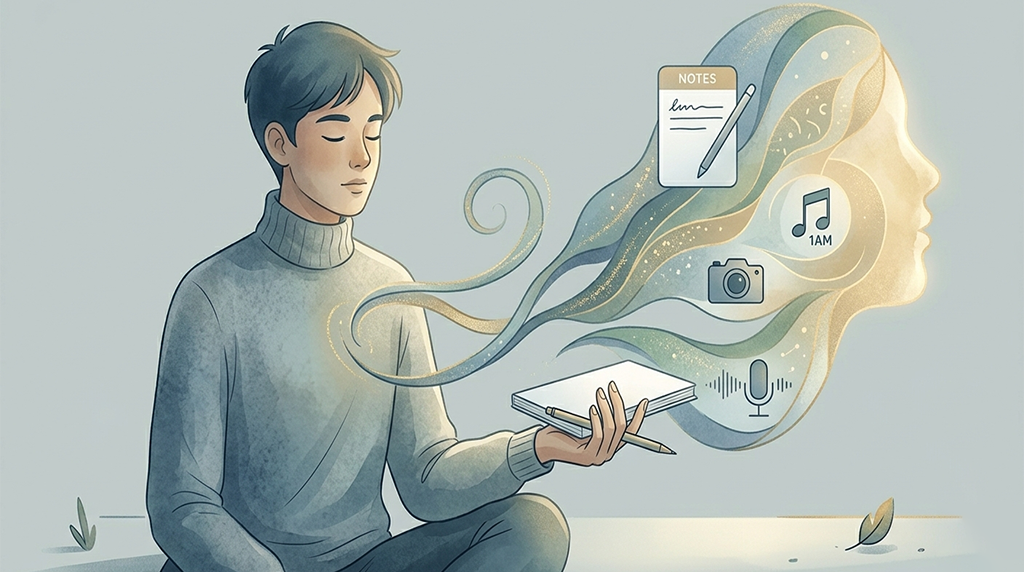
You do not have to be an artist. That is not what this is about because art is anything that heals.
A playlist you made at 1am that perfectly captured a mood you couldn’t explain. A voice note of you just talking to yourself on a walk.
A sketch that looks like nothing but feels important to draw. A notes app entry that starts with “I don’t even know what I’m feeling but” and then goes for two paragraphs.
All of it is creative expression. All of it is how you find your voice as a teenager.
When you make something, you make choices. Every choice is a small piece of evidence about who you are right now.
What you find beautiful. What makes you laugh without thinking. What makes you feel something real.
Over time those choices stack into a pattern, and that pattern is your voice, even if nobody else ever sees it.
The teenagers who know themselves best are rarely the ones who did the most. They’re the ones who stopped long enough to notice what things felt like from the inside.
The Last Line
God always has a plan. The version of you that’s still forming, still questioning, still figuring it out, That version is exactly who needs to exist right now for you to become who you’re supposed to be.
That’s exactly what Niqay is built for.
A space where you feel supported, grow with real confidence, and find friendships that are genuine, people who show up, people who aren’t performing, friends who are friends for real.
Because figuring out how to find your identity as a teenager is hard enough But you don’t have to do it alone, you can Join the Niqay community and find people who actually get it.