
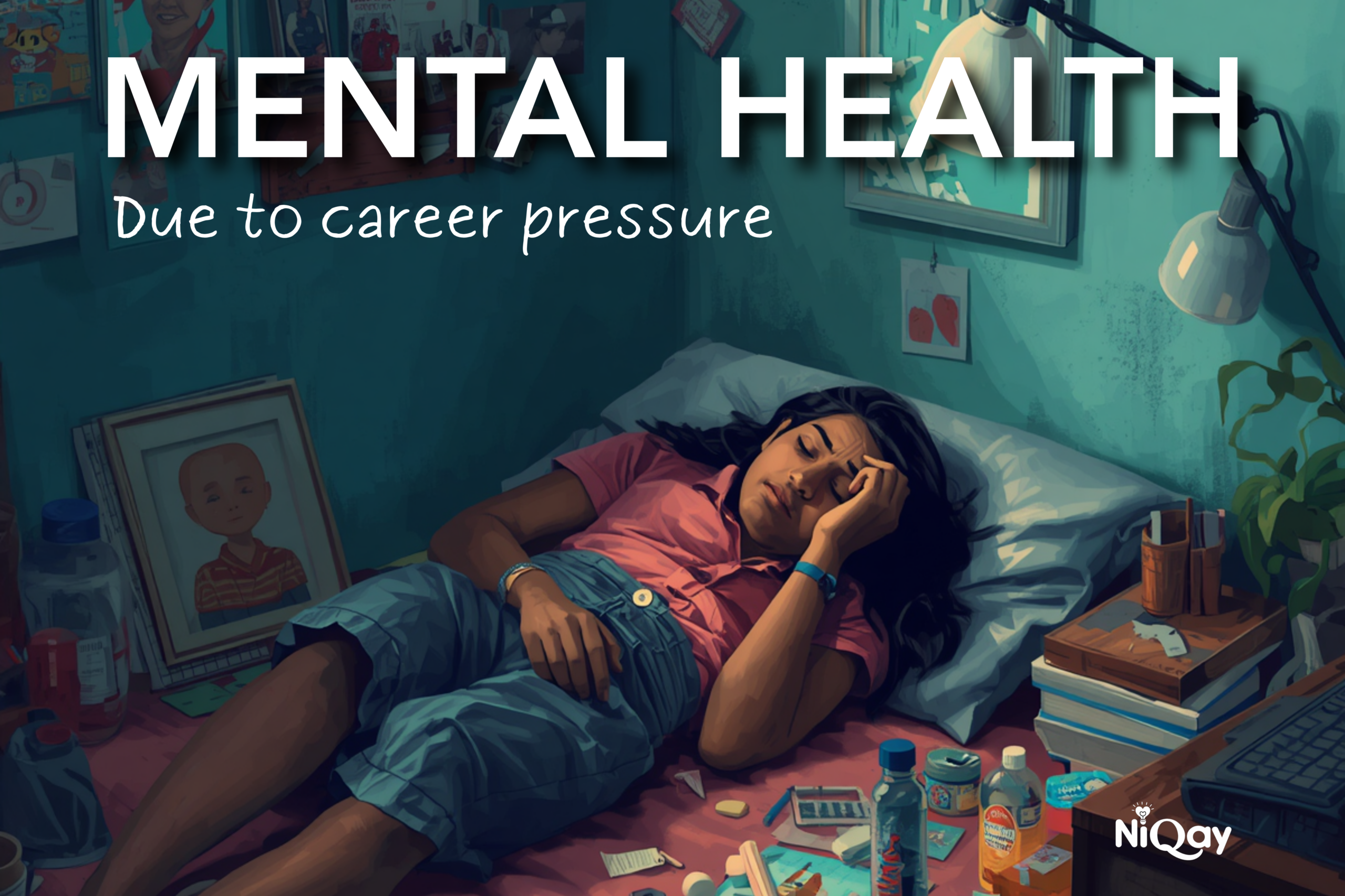
Your marks come out. For one whole day, everyone’s proud of you, and you’re proud too.
But then the mood shifts quietly.
Talk turns to stream, college, “so what’s the plan?” The thing you worked so hard for stops feeling like enough.
This isn’t about which stream to pick. It’s about what career pressure after Class 10 does to a teenager’s heart.
It doesn’t hit like an exam. It’s slower, heavier, and it doesn’t leave once results are out.
How Career Pressure After Class 10 Affects Students’ Mental Health

Arjun started scrolling college cutoff lists under the blanket after everyone slept.
Nothing new was going to show up at 1am. But his mind wouldn’t let it go.
Academic stress is one test starting to feel like your whole future.
A test ends. This doesn’t.
Student mental health takes a quiet hit.
Focus shortens, patience wears thin, and there’s a tiredness sleep can’t fix, none of it shows on a report card.
Signs Your Child Is Struggling With Academic Pressure
Riya started skipping lunch with friends, saying she had “too much to revise.” Her marks hadn’t dropped, but she’d stopped laughing at things that used to.
Emotional signs look like short temper over small things, hiding a quiet dread underneath.
Some go quiet about school, it hurts too much to talk about.
Others overwork themselves into looking fine, when fear is what’s driving it.
Mental health signs in teenagers, a stomach that’s off, a jaw that aches from clenching, often live in the body before they ever turn into words.
Why Students Tie Their Self-Worth to Marks and Career Choices

There’s a specific ache after a bad result, a quiet wondering if it says something true about who you are. Years of praise tied to numbers teach a heart that marks equal worth.
Wanting to do well is normal, it only hurts when a test feels like proof of who you are.
Academic validation feels good briefly, but real student confidence needs something steadier than a scorecard.
Kabir used to volunteer first for group projects.
By Class 11, he stared at a blank page, wanting to care, unable to find the energy.
It starts small, an extra hour here, a skipped break there, until a student who used to care feels almost nothing at all.
A burned out student wants to work but hits a wall their tiredness built.
Calling it laziness just adds guilt.
Teenage burnout, left uncaught, follows you into college and work, teaching you exhaustion is just the price of trying.
How Fear of Failure Controls Students’ Decisions
Fear of Disappointing Parents
This fear rarely gets said out loud, but it’s often the loudest one in the room, the silence after a bad result. T
hat silence has pushed students toward choices that were never really theirs.
Fear of Choosing the Wrong Career
“What if I commit and it’s wrong?”
A choice at fifteen can feel like a locked door, though most paths bend more than they look.
Fear of Being Left Behind
Watching a friend talk confidently about their future while you’re unsure sparks a strange panic, rarely about the career at all.
Why High-Achieving Students Are More Vulnerable
The student with the best marks often feels the least secure.
Once someone’s “the smart one,” every test becomes something to lose.
Perfectionism in students comes from fear, not high standards.
Anxiety in high achievers hides well, calm outside, but a quiet worry inside that the next test could break it all.
The Mental Health Effects of Constant Comparison Among Students
Meera used to feel proud showing her marksheet. Now the first thing she does after a result is check what her friends scored.
Comparison among students does this over time:
- Progress feels smaller next to someone else’s result
- Friendships quietly turn competitive
- Struggles get hidden, admitting them feels like losing
Comparison anxiety now lives on phones too, wearing people down instead of pushing them forward.
How Parents Can Reduce Career Pressure and Support Their Teen
One mother said things changed the day she swapped “what did you score” for asking how her son’s day felt.
He shrugged, then kept talking longer.
Listen Before Advising
“What’s on your mind?” lands differently than advice.
Listen for the feeling before reacting to the decision.
Stop Comparing Children
“Your cousin already knows what he’s doing” just adds weight.
Reduce academic pressure by cutting comparison out.
Encourage Curiosity Instead of Perfection
A student allowed to explore and get things wrong grows up healthier around learning.
This doesn’t erase pressure, but it shifts who carries it, from a teenager alone to a family together.
When Should Parents Seek Professional Mental Health Support?
A little stress before a big decision is normal, what matters is stress that doesn’t pass.
Moments that call for teenage mental health help:
- Talking about feeling hopeless
- Daily pain with no clear cause
- Pulling away from people once loved
- Mentioning self-harm, even as a joke, which deserves immediate attention
Counselling for students isn’t a sign of failure.
It’s support, like a tutor or coach, that helps carry a heavy stretch.
Reaching out to a mental health professional who specializes in adolescents is one of the most caring things a family can do.
The Last Line
No rank, no result, no college name is worth your peace of mind, even if that’s easy to forget amid deadlines and relatives asking.
Career pressure after Class 10 is real.
Pretending otherwise only makes it quieter, which makes it more dangerous. Some discomfort comes with growing, but it should never swallow who you are underneath the marks.
A mind pushed too far takes far longer to heal than any decision takes to make.


Great content! Keep up the good work!