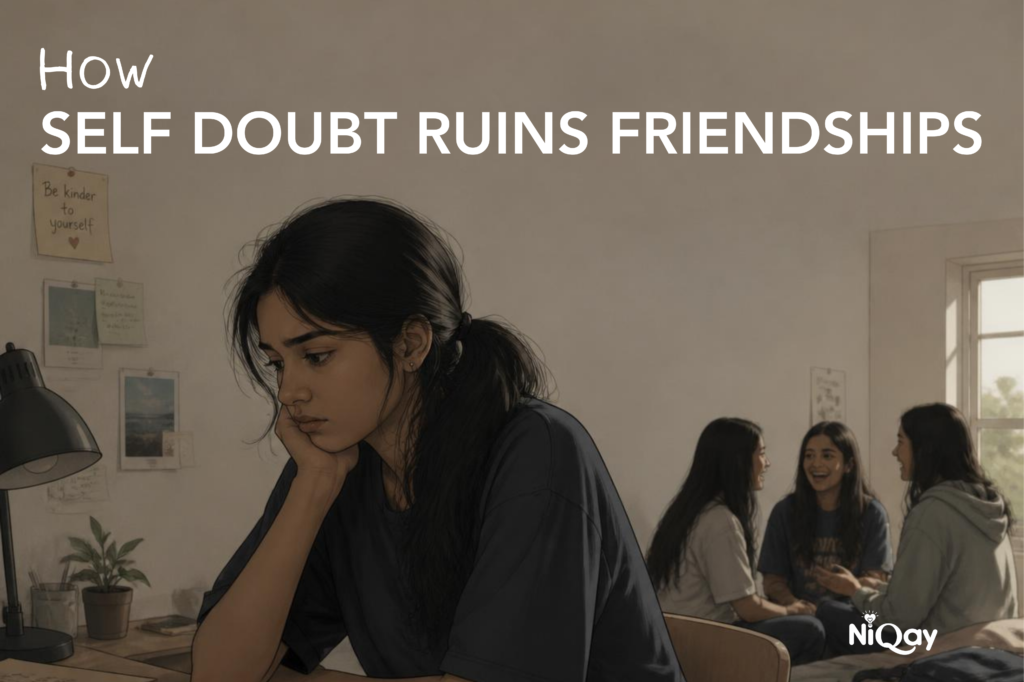
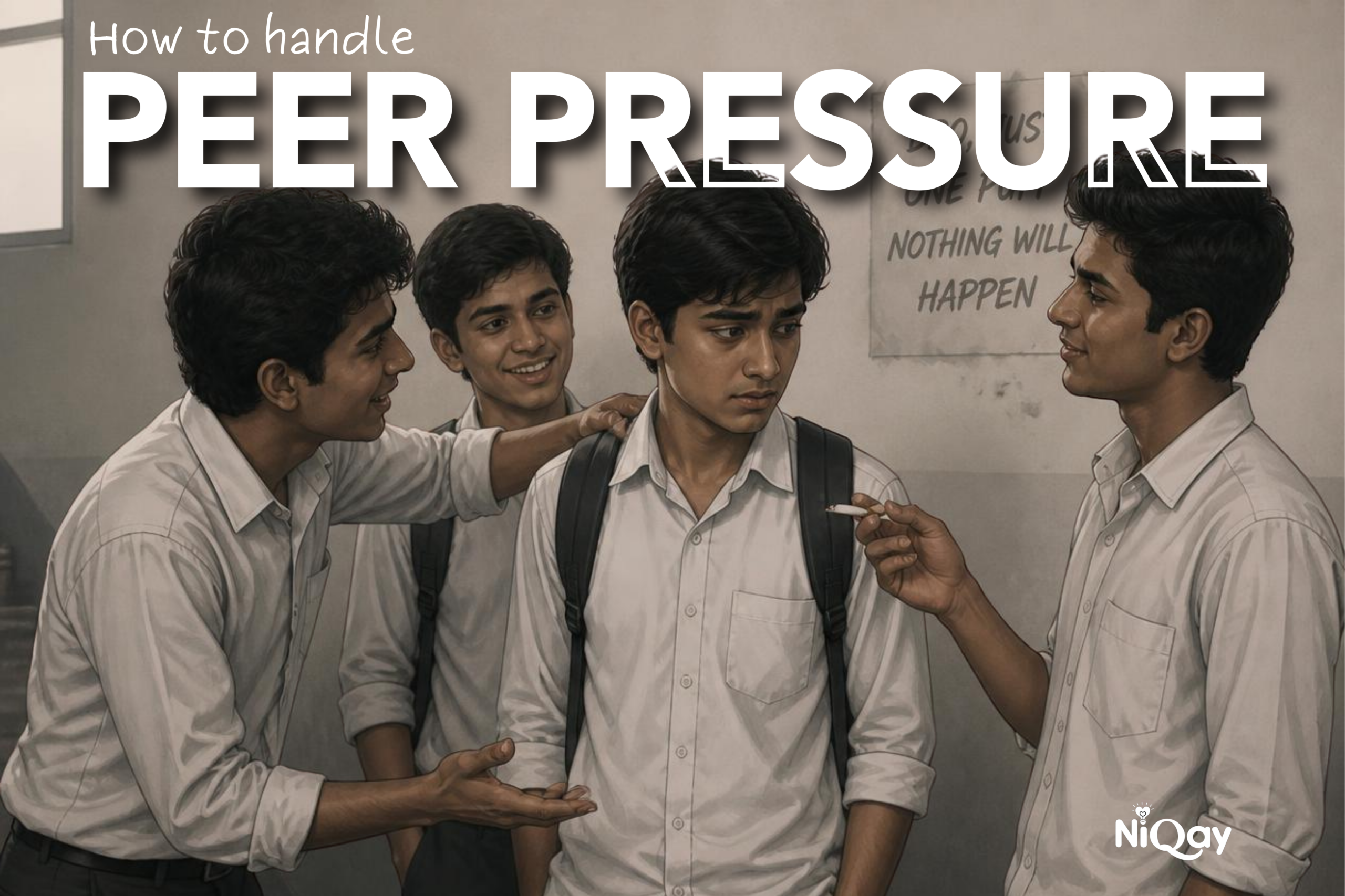
In 8th grade, I told my friend group I had already tried smoking.
I hadn’t. But everyone was talking about it like it was something cool and So I made up a story.
A detailed one, just to fit in.
That one lie needed six more to stay alive.
And the worst part wasn’t the lying, but the guilt and that feeling of disgust it bought.
Like I folded myself into a shape I didn’t recognize and honestly a shape I never wanted to be in.
Two years later, when that group quietly fell apart, I realized something that hurt more than the original lie: those people never actually knew me.
They knew the version I had performed for them.
And I had worked so hard to keep that performance going that I had lost track of where it ended and I began.
Why Your Brain Makes This So Hard
Peer pressure isn’t a willpower problem. It’s a brain problem, and knowing that changes everything.
During adolescence, the prefrontal cortex, the part responsible for long-term thinking, is still developing.
At the same time, the brain’s social-reward circuits run at full speed.
Research on adolescent neuroimaging shows that peer presence during risky decision-making enhances reward-related brain activity in teens but not in adults.
Your friends watching you literally changes how your brain processes a choice.
What Giving In Actually Costs You
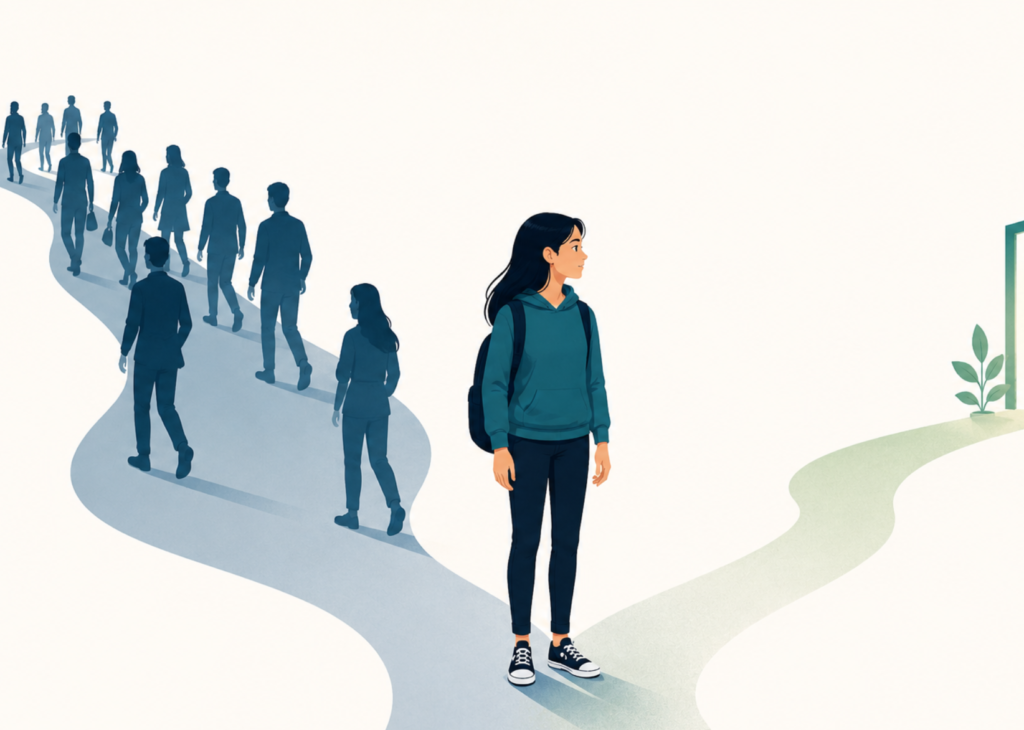
Most conversations about peer pressure focus on the immediate bad decision, the substance, the skipped class, the risky dare.
But a 2024 University of Virginia study tracked 184 adolescents from age 13 to 24 and found the damage goes much further.
Teens who faced high peer pressure were more likely to experience coercive dynamics in adult romantic relationships and lower functional independence, managing finances, taking care of themselves, making responsible choices.
The habit of going along to keep the peace doesn’t stay in school. It follows you into your 20s.
The Real Problem Nobody Talks About
The teens who cave to pressure most often don’t lack courage, they lack clarity about themselves.
A 2023 study in Frontiers in Public Health studied 830 adolescents and found that teens with stronger self-concept clarity, a clear, consistent sense of their own values, showed significantly weaker responses to peer pressure.
When you know who you are, someone pushing you to act differently runs into a wall.
When you’re still figuring it out, you’re easy to move, because you’re not sure what you’d be losing.
This is exactly why “just say no” fails. It treats peer pressure as a moment to survive, not an identity problem to solve.
6 Research-Backed Ways to Handle It
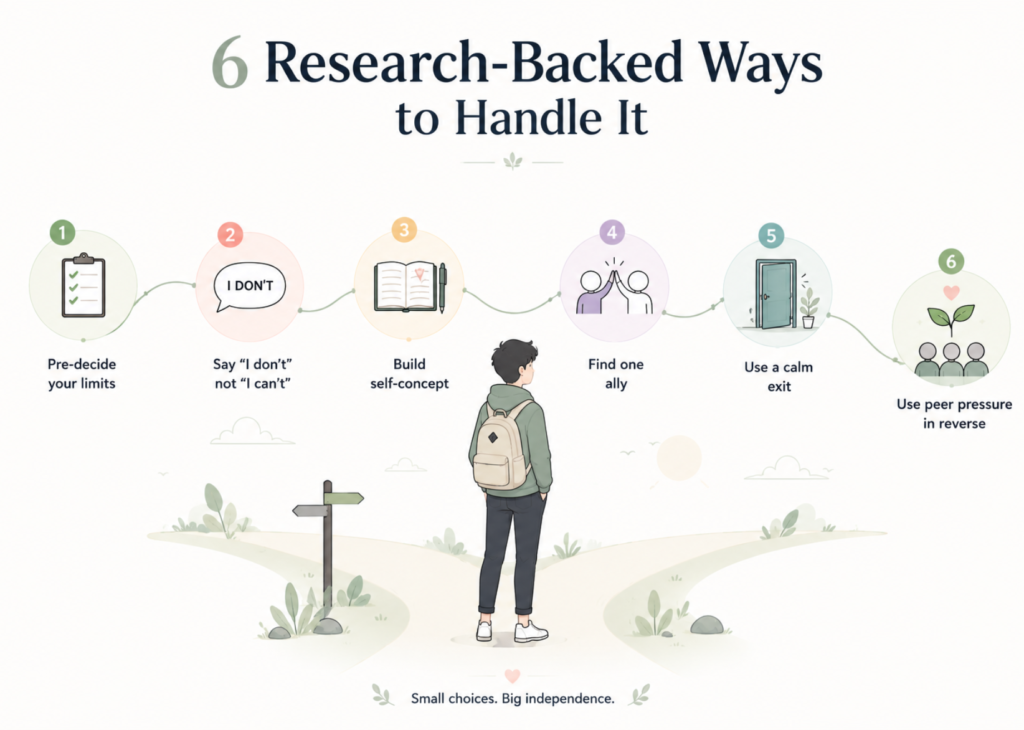
1. Pre-decide your limits.
Your calm, private brain makes far better decisions than your peer-pressured one.
Before you enter that room, decide what you won’t compromise on.
When the moment comes, you’re just following a decision you already made.
2. Say “I don’t” not “I can’t.”
Behavioral research shows “I don’t do that” signals a personal standard.
“I can’t” signals an obstacle people immediately try to remove.
One is a boundary. The other is a challenge.
3. Build self-concept on purpose.
Since self-concept clarity is the actual buffer, do the work. Journal.
Try things alone. Notice what you enjoy when no one’s watching.
The clearer your picture of yourself, the less someone else’s opinion can redraw it.
4. Find the one person who agrees with you.
Social conformity pressure drops when even one other person holds your position.
That person usually exists in the room,they’re just waiting for someone to go first. Be that person.
5. Use a calm exit, not a speech.
“That’s not really my thing” or “I’ll sit this one out” works better than a confrontation.
You keep the relationship intact without selling yourself out.
6. Use peer pressure in reverse.
Research confirms peer influence isn’t always negative, it can push teens toward healthy habits and positive role models too.
The same social wiring that pulls you toward risky behavior pulls you toward ambition if you’re around the right people.
Choosing your friend group isn’t social climbing.
It’s one of the most consequential decisions you’ll make in school.
The Last Line
Your brain is wired, during adolescence specifically, to treat social belonging like survival. That’s not a flaw.
That’s how humans are built.
But the research is also clear: teens who know themselves are harder to move.
The ones who hold their ground now build something that follows them into adulthood, not the scars of going along, but the quiet confidence of having stayed.
You don’t have to choose between your friends and yourself.
You just have to know which one you’re willing to lose.