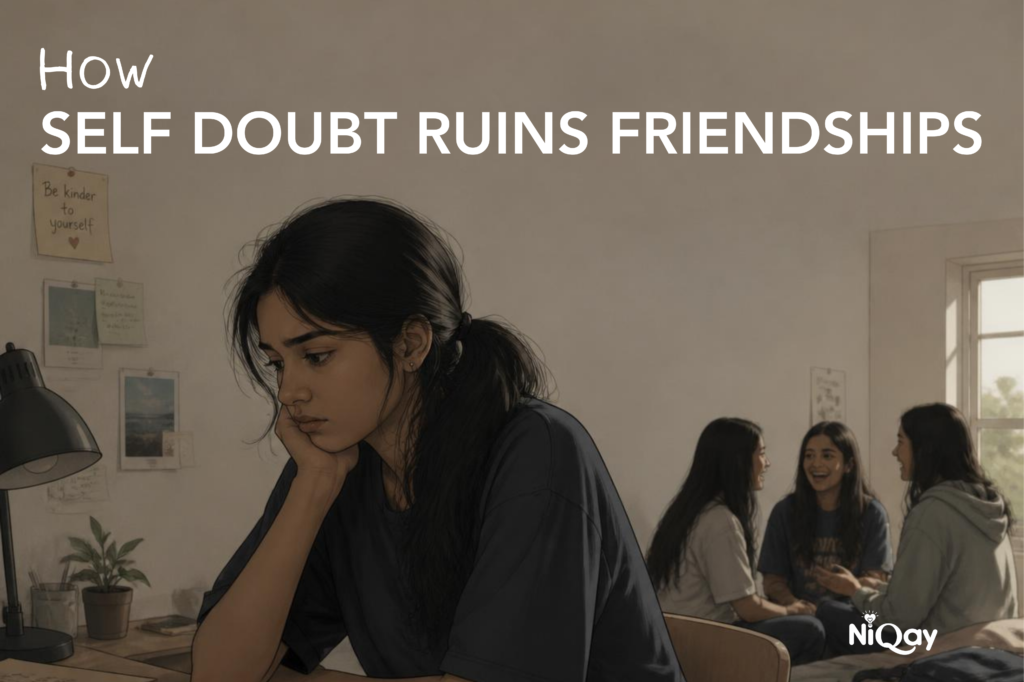
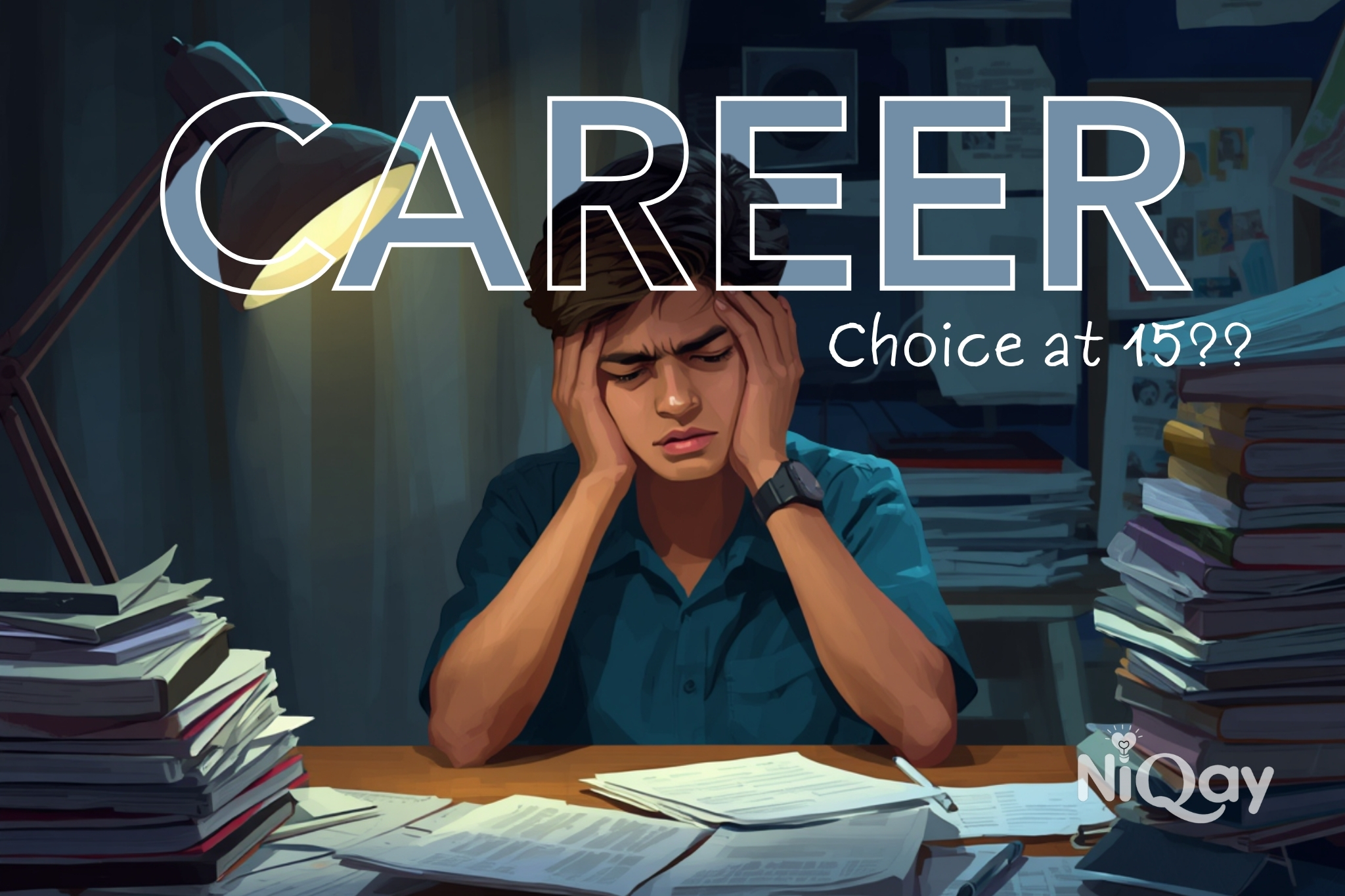
Your last paper is done.
You walk out of that exam hall thinking that you will finally take a break, A few weeks of just sleeping, watching your favourite shows and hanging out with friends.
But that break never really comes.
Your phone starts buzzing. Relatives are calling.
Neighbours drop by. Your parents sit you down at the dining table with that look.
And then comes the question that follows you everywhere for the next few weeks.
“So… what stream are you taking?”
You’re fifteen. You haven’t figured out what you want for snacks half the time.
But a decision about your entire career choice is being demanded from you.
One that’s treated like it will shape the rest of your life. And everyone around you seems to already know what the answer should be.
This happens to millions of teenagers across India, Every single year but nobody seems to stop and ask if any of it makes sense.
Career Choice Pressure on Students After class 10

Completion of class 10th comes with a specific type of mental stress.
It’s not related to your scores or result but It’s from suddenly being treated like an adult and expected to have a plan that SHOULD WORK.
One day you’re stressed for your science paper and you are being compared to your elder sibling the very next day.
Your cousin who “got into a good college.” Your neighbour’s son who is “doing so well in IIT coaching.”
This pressure eats you up from inside, every night and morning. You have nowhere to go nowhere to cry.
It’s there in WhatsApp family groups. It’s there at dinner. It’s there in the way teachers look at you during the first week of Class 11.
And if your answer is “I’m not sure yet”, people look at you like a loser.
Believe me YOU ARE NOT. You are fifteen. Uncertainty at this age is justified, It’s just what being fifteen looks like.
Why Choosing a Career at 15 Is Too Early
Biology is something that people tend to ignore.
The prefrontal cortex handles things like long-term planning, understanding consequences, and making big decisions.
It isn’t fully developed until around the age of 25. So it is NOT YOU, but simple biology.
At fifteen, most kids are still working out:
- Who they are as a person
- What they actually enjoy versus what they’ve been told to enjoy
- How they learn best
- What a meaningful life even looks like to them
- What kind of people they want around them
These aren’t fill in the blanks with one word answers, rather long questions that deserve long explained answers, which takes time.
The teenage years are meant for figuring things out, not locking things in.
When a fifteen-year-old is pushed to make the right career choice and commit to it, is a like asking someone to sign a contract they don’t have the experience to understand yet.
Exploration should come before execution. Always.
Why Stream Selection After Class 10 Feels Like a Life Decision

At some point, picking between Science, Commerce, and Arts stopped being a simple school decision.
It turned into something that feels permanent.
Stream selection is treated like a prophecy now.
Science means doctor or engineer. Commerce means finance or business.
Arts means… well, people go quiet and judge you as hard as they could.
Riya loved writing. Psychology genuinely excited her. But her parents pushed her into Science because “arts has no future.” Two years were spent struggling through Physics and Chemistry, hating every single day. By the time she switched streams in college, a lot of confidence had already been lost. So had two years of momentum.
Riya’s story isn’t unusual.
It gets repeated in some form in classrooms across every Indian city and trust me for every single teen, even the best once you see scoring 97% they have some ambitions and dreams they don’t even talk about.
The push to pick the “right” stream is really just pressure to fit yourself into a box that someone else decided was safe.
There isn’t much room in that box for who you actually are.
How Coaching Institutes Influence Stream Selection
After Class 10 results, coaching institute banners go up everywhere.
JEE. NEET. CA Foundation. The message on all of them is the same.
How Coaching Institutes Influence Stream Selection
An entire industry has been built around the uncertainty teenagers feel at this age. And that industry’s answer to uncertainty is to get rid of it as fast as possible.
Commit. Pay the fees. Start the grind do all these AND ASK NO QUESTIONS. Because if you are questioning, you are a loser.
Here’s what that grind actually looks like for a lot of students:
- Waking up before 5 AM for coaching batches that run before school even starts
- Every weekend spent on past papers with no time left for anything else
- Being told that any interest outside exam prep is a distraction
- Using mock test scores as the only measure of how smart they are
What this environment doesn’t do is help anyone figure out what they actually want. It tells students what they’re supposed to want.
Then it trains them to chase it, despite what the student wants and what the student likes.
What comes out the other end isn’t a motivated generation.
It’s an exhausted one that’s been told certainty is the same thing as maturity and that art doesn’t pay bills.
Why Teenagers Need Time to Explore Different Career Options

Between 15 and 18, things are supposed to be tried. Some of them are supposed to fail. Curiosity is supposed to be followed, even when it leads nowhere useful.
That’s not wasted time. That’s the whole point of being that age.
But when every hour is already filled, school, coaching, homework, mock tests, and then repeat, there’s simply no room left.
Self-discovery doesn’t happen on a schedule.
Think about what quietly disappears when that space is taken away:
- The student who might have found a real love for graphic design if one free afternoon a week had been given to her
- The boy who could have discovered he’s brilliant at debate, or cooking, or fixing things, if exploration had been allowed
- The kid sneaking philosophy books under the desk because humanities “isn’t an option”
Exploration before eighteen isn’t extra. It’s how taste gets developed.
It’s how a sense of direction gets built. Without it, adulthood is entered with a career plan but no real understanding of who that plan is even being built for.
How Career Pressure Affects Students’ Mental Health
This is the part that rarely gets brought up at parent-teacher meetings.
Career pressure doesn’t just create stress.
Over time, something deeper gets worn down. And the damage doesn’t always look like damage from the outside.
In almost every coaching batch, there’s one student who studies 14 hours a day and never seems to rest.
Teachers point to them. Parents hold them up as the example.
But if five minutes are spent actually talking to that student, what’s usually found is someone who can’t sleep properly, can’t eat, and is genuinely terrified of what happens the moment they stop.
That isn’t ambition. That’s fear with a productive-looking surface.
Why Students Tie Their Self-Worth to Marks
Class 11 and 12 have a way of turning a whole person into a single number. Batch rank. Unit test percentage. Mock exam score.
Meera got 98% in Class 10. She made it into the best Science college in her city. By the end of Class 11, her friends hadn’t heard from her in months.
Drawing, something she’d done since she was seven, had been completely given up.
She told her mother she felt like she was “disappearing.”
A bad test shouldn’t feel like a verdict on who you are.
But when self-worth has been tied to ranks for long enough, that’s exactly what it starts to feel like.
What Happens When Students Choose the Wrong Stream

For many students, the plan doesn’t work out. And the system has done almost nothing to prepare them for that.
Millions of students sit for JEE and NEET every year.
The seats available are a tiny fraction of the students applying.
Most of them, after two or three years of preparation, won’t get what they were working toward.
What happens after that result comes in?
A lot of them are completely at a loss.
Years were spent being told the exam was the only goal. No alternatives were talked about.
No skills were built outside of test prep. So when the result doesn’t come through, it doesn’t just feel like disappointment. It feels like there’s no identity left to fall back on.
Why Some Students Still Feel Lost After Choosing the ‘Right’ Career
Then there’s the quieter version of this. Slower. Peaceful yet the Harder version to put into words.
These are the students who cleared the exam. Who got the seat. Who sat down in the first lecture of their engineering or medical programme and felt absolutely nothing.
Not relief. Not excitement. Just a hollow now what?
Everything was done right. Every instruction was followed. And still, sitting in that classroom, it becomes clear that this path was never really theirs.
It belonged to their parents’ fears, their school’s expectations, the coaching brochure that made it all sound so certain.
That realisation at twenty is one thing. It would have been so much easier to reach at fifteen, if the right questions had been asked back then.
How India’s Education System Prioritises Exams Over Self-Discovery
The Indian education system was built around outcomes. Marks. Ranks. Cutoffs. Placement numbers.
Self-discovery was never part of that design. It can’t be put in a percentage. It doesn’t go on a school brochure. So it gets left out.
What remains is a system that’s genuinely good at producing students who can clear exams, and genuinely poor at producing young adults who know themselves.
The system isn’t accidentally this way. It was designed to produce a certain kind of worker for a certain kind of economy.
The problem is that the economy has changed completely and the system has barely moved.
The ones paying for that gap are fifteen years old and being asked to make permanent decisions.
What Teenagers Need Before Choosing a Career Path

This isn’t a case for lowering standards or letting students drift.
It’s a case for giving them something real to work toward, something that actually belongs to them.
Why Career Exploration Should Come Before Stream Selection
Before a stream is chosen, before a path is committed to, actual exploring needs to happen. Not shadowing a parent’s career.
Not following a counsellor’s suggestion based on marks.
Real exploration looks like:
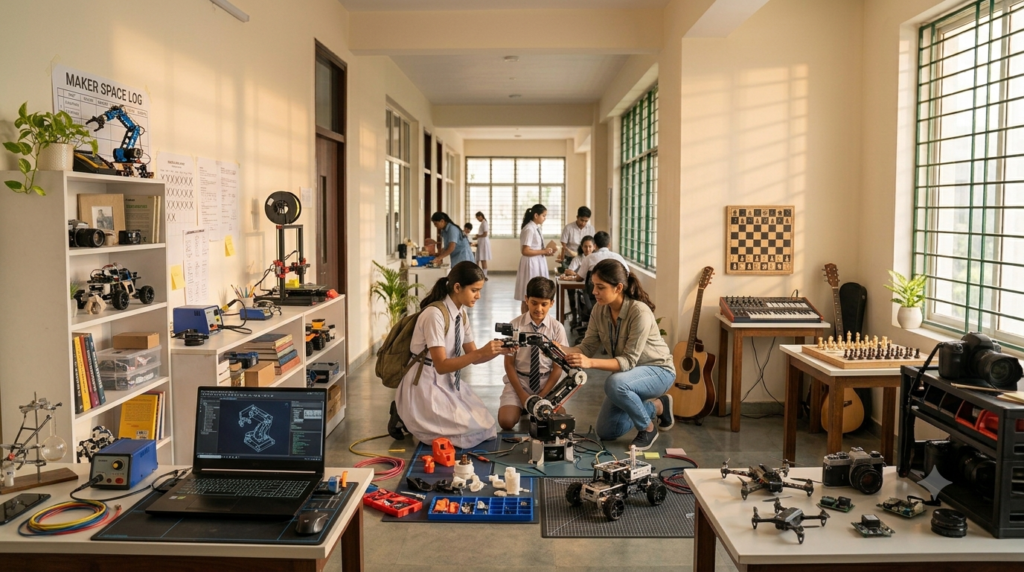
- Being given access to subjects that school never offered, like design, coding, philosophy, or economics
- Hearing from actual professionals about what their day-to-day work really looks like, not the version that gets put in brochures
- Taking on projects or short internships in areas that feel genuinely interesting
- Being allowed to care about more than one thing without being told to “focus”
This takes time. It takes adults who trust that curiosity without a clear destination is still valuable.
These years between fifteen and eighteen aren’t just a runway before real life starts. They are real life. What happens in them matters.
Why Exposure to Real Why Career Exposure Matters Before Choosing a Stream
Most fifteen-year-olds pick their stream based on one of three things. What their parents want. What their friends are doing.
What their marks suggest they’re good at.
None of those are solid reasons.
Doing well in a subject at school doesn’t tell you whether you’ll want to spend thirty years working in that field.
Picking the same stream as your best friend makes sense emotionally, but it’s not a career strategy.
What’s actually needed is real exposure.
Real work. Real people doing real jobs.
Not a YouTube video about what engineers do, but an actual conversation with someone who shows up to that job every day.
Why Children Shouldn’t Be Treated Like Career Projects
Most Indian teenagers know at least one parent, maybe their own, who has the whole thing mapped out before the child is old enough to be consulted.
Medical seat by 22. Marriage by 27. House by 30.
It comes from love. It comes from real fear about a world that feels very competitive.
But somewhere in all that planning, the child becomes a project rather than a person.
Children are not career projects.
They are not second chances for their parents’ unfulfilled dreams.
They are people. Fifteen-year-old people, with all the confusion and contradiction that age carries.
But still people, with instincts and interests and their own way of moving through the world.
When every family conversation gets filtered through “will this help with college admissions,” what’s handed to them isn’t preparation for adulthood.
It’s a plan they didn’t write, with instructions to go execute it.
And then everyone wonders why so many young adults feel like strangers in their own lives.
The Last Line
A stream was always supposed to be a starting point.
A loose direction. A two-year structure before a much larger and more flexible world opens up.
It was never meant to function as a life sentence.
A choice made by someone who can’t legally vote, drive, or sign a contract probably shouldn’t carry that much weight.
The teenagers inside this system aren’t lazy or unfocused. Most of them are working harder than they should have to at this age. What’s missing isn’t effort.
It’s time. Time to figure out who they are before the world starts demanding they know exactly where they’re headed.
A stream choice should make things possible, not close things off.
Space to explore, to question, and to change your mind should be something every fifteen-year-old is given, not something that has to be fought for.
Because school was never supposed to produce the most efficient exam-passers.
It was supposed to raise people who understood themselves, gave a damn about the world, and could find their way toward something that actually meant something to them.
That doesn’t happen in one summer after Class 10.
It takes a childhood that was actually allowed to breathe.