A skill-first success roadmap for students who want a future-proof career in 2026
Picture this. You sit in a coaching center at 7 a.m. Your eyes feel heavy.
Your parents talk about “the fees” like it’s a sacred number. Nobody can question it.
This is where a skill-first success roadmap should start, not after your exam results, but right here, in this doubt.
A small thought creeps in: is this actually going to work?
That question is fair.
It’s the start of any real career plan. It deserves a true answer, not another lecture.
This isn’t about degrees being useless. It’s about where your money goes, and where your time goes.
Does that spending match the world you’re about to enter?
That’s what a skill-first success roadmap means: picking a career without expensive coaching, and building a future-proof career instead of just chasing a rank.
In short: spend less on coaching fees, spend more on real, useful skills.
That way, your college years and your skills work together, not against each other.
A skill-first success roadmap means redirecting money and time from exam-focused coaching toward practical, in-demand skills like coding, design, communication, and AI literacy while still completing your degree. This combination builds a resume that shows proof of work, not just a percentile.
Spend Less on Coaching, More on Skills
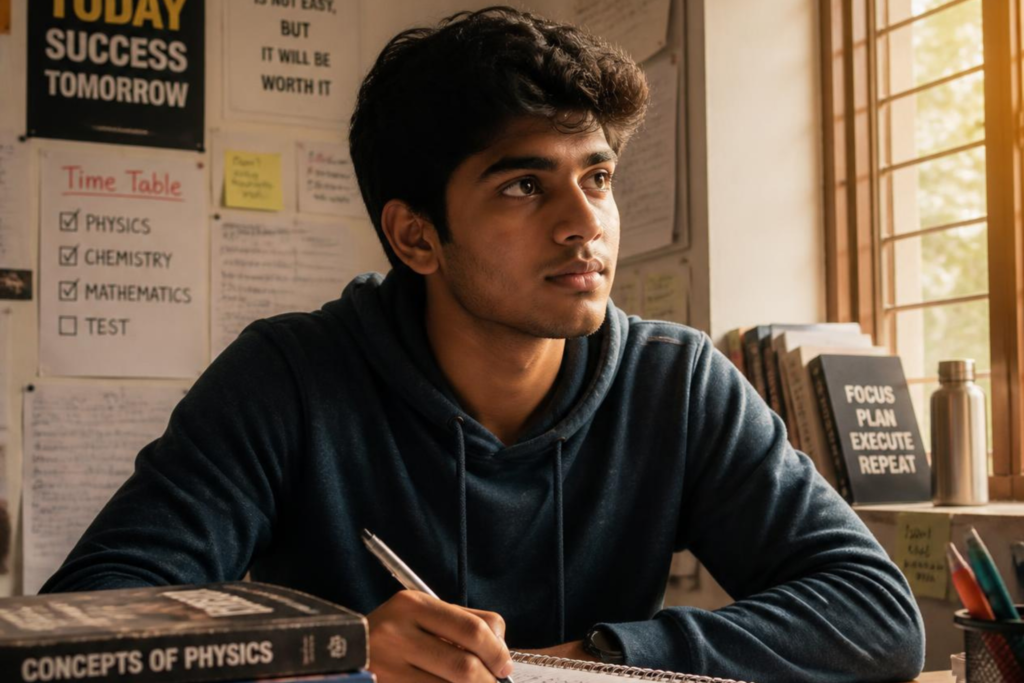
Coaching centers take your money but rarely teach you a skill.
Capital reallocation means moving that money somewhere better, this is step one of any skill-first success roadmap.
Lakhs go into the cost of coaching institutes.
Most of it pays for memorizing formulas for one exam day.
But the real world runs on other things: talking well, coding, design, and solving problems.
Ask this before your next coaching batch: where else could that money go?
Money spent wisely at seventeen can shape your twenties.
This is where a real career plan begins, not in a classroom, but in a choice about money.
Think of it as skills added to your degree, not skills instead of a degree.
Where that reallocated budget could go instead:
- A coding or design course that builds something you can show, not just a score you forget.
- A laptop and stable internet, so you can learn from teachers on sites like Coursera.
- Small projects or freelance gigs that teach real skills faster than any textbook.
- Books or tools tied to a skill you truly enjoy, not one your cousin picked for you.
None of this means you should drop out or skip exams.
It means treating your budget like a choice, not a habit.
Every rupee spent on fear is a rupee not spent on growth.
That single shift is capital reallocation in real life.
AI Tools for Faster Learning
AI tools now do what expensive tutors used to do.
AI tools for students have become genuinely useful, and they’re free. They’re part of any modern skill-first success roadmap now.
Learning to use them well is its own skill.
Using ChatGPT for learning isn’t about copying answers.
It’s about asking better questions. It helps you check your own logic, or hear a hard idea explained in a new way until it clicks.
This is what people call AI in education.
Knowing how to use AI is becoming as normal as knowing how to search the web.
Ways students are using AI right now:
- AI learning platforms that match how you personally learn.
- Tools that build speaking skills through mock interviews.
- Apps that turn a hard chapter into a short, clear summary.
- Free lessons that teach you to learn AI online, one step at a time.
None of this replaces real thinking, it supports it.
You Need a Degree and Real Skills
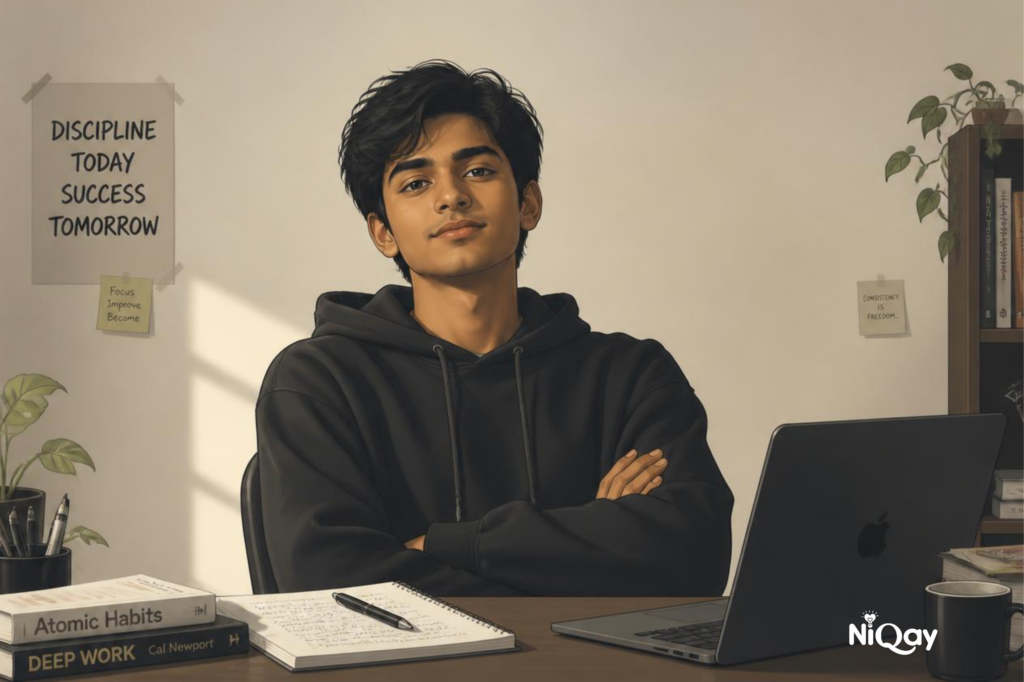
Many students build real skills after class hours, on their own time.
A student finishes homework, then opens YouTube, not to scroll, but to learn video editing, or Python, or how to write better.
These are high income skills. No timetable ever makes room for them. Nobody assigned this.
The student chose to learn it herself.
That’s the dual-track life at the center of any skill-first success roadmap.
College still matters, it gives you structure, a certificate, and friends.
But real change often happens in the hours nobody grades: the evenings spent building a small project, not just revising notes.
This is the quiet college vs skills question, sometimes called college degree vs skills.
It plays out in real life, and it doesn’t have to be one or the other.
A commerce student who also learns marketing shows exactly why this works. She studies commerce. She also learns Canva and basic marketing on the side. By her final year, she has more than a degree, she has real work to show.
It’s proof she can actually do something. That difference gets noticed in interviews, long before anyone reads her degree certificate closely.
That’s a skill-based career in one real story.
Free Online Courses and Global Mentors
The internet removed the biggest barrier to learning from experts. Learning from an expert used to mean living near one, or paying huge fees.
That wall is mostly gone now. Internet learning made this stage the easiest part of the whole plan.
A teenager in a small town can watch a lecture from a professor abroad. She can join a free workshop. She can follow a mentor’s advice shared openly online.
Free and paid courses from Coursera, Udemy, and edX now sit next to LinkedIn Learning as real, respected proof of effort. This is what people mean by lifelong learning
Chosen freely, not forced.
Where to find this access:
- Free lectures from top colleges, found on sites like Khan Academy.
- Groups on Discord or Reddit, where real experts answer real questions.
- AI tools that explain a hard idea in five different ways, until one finally clicks.
- Mentors on LinkedIn who share lessons for free, with no fees attached.
This kind of access used to be a privilege.
Now it’s mostly about staying curious and showing up daily.
The student who uses it well isn’t the smartest one in class, they just stopped waiting for permission. They built real skill on their own time. That’s what makes a skill-first success roadmap actually work.
Best Skills to Learn Right Now
Not every useful skill needs a classroom.
Some can be picked up through free tutorials and small projects.
The trick is picking one that fits how your brain works, not the one that looks impressive on paper.
- Learn coding online through free sites. Even basic Python can open doors in many fields.
- Learn digital marketing basics. Every business needs someone who understands online buyers.
- Try content creation and video editing. Both are strong skills for remote work today.
- Try graphic design, UX design, copywriting, or sales skills. Pick one that feels like fun, not work.
These aren’t random hobbies.
Each one is a real building block of a skill-first success roadmap.
Each one builds real skill, the kind that shows up in your work, not just on paper.
Strong speaking and writing skills, paired with any one of these, often matter more in interviews than students expect.
Skills vs Degree: What Pays Off
Degrees lose value the moment industries change. Skills, on the other hand, grow.
That’s the whole point of a skill-first success roadmap, it’s not about chasing one exam result.
A person who learns to write clearly keeps that skill for life.
So does a person who learns to think clearly, or solve real problems. Job titles come and go. This skill doesn’t.
Picture two lines on a graph. One line is degree value, it jumps right after graduation, then slowly fades as the market shifts.
The other line is skill value, it climbs steadily, year after year, because skills grow with you.
Even LinkedIn’s own research points to this shift: employers now care more about real ability, and less about a famous college name.
Seen this way, the skills vs degree argument stops feeling like a fight. It starts to look like simple math.
This isn’t a reason to panic about your major.
It’s a reason to stop treating your degree as the finish line, it’s the entry ticket, not the whole show. That’s why capital reallocation toward skills matters more than a famous college name on paper.
The teenagers who do well later aren’t the ones with the fanciest college names.
They’re the ones who quietly built something real, one project and one skill at a time, while everyone else waited for a shortcut.
Frequently Asked Questions
Is a college degree enough in 2026?
Not always on its own. A degree still helps, but pairing it with real, practical skills is what most employers now expect.
What are high-income skills?
They’re skills like coding, digital marketing, design, and writing. Companies pay well for them because they solve real problems.
Should students invest in coaching or skill development?
Both have a place, but skill development usually lasts longer. Skills grow with the job market; coaching often ends after one exam.
Can AI replace college education?
No. AI can support learning and explain ideas faster, but it can’t replace structure, mentorship, or the trust a degree still carries.
How can students use AI to learn faster?
By using AI tools to explain hard topics simply, run mock interviews, give writing feedback, and help with study planning.
What skills are most valuable in the future?
Skills tied to AI, communication, and creativity tend to stay useful. They bend and adapt as industries change.
What are the best skills to learn while studying?
Coding, digital marketing, and communication are strong starting points. They work in almost any field.
Is online learning better than coaching institutes?
It depends on the goal. Online learning is usually cheaper and more flexible; coaching can help with focused exam prep. Many students combine both.
How can college students earn while studying?
Through freelancing, small internships, or content creation, or by selling a skill online. All of this also doubles as real-world practice.