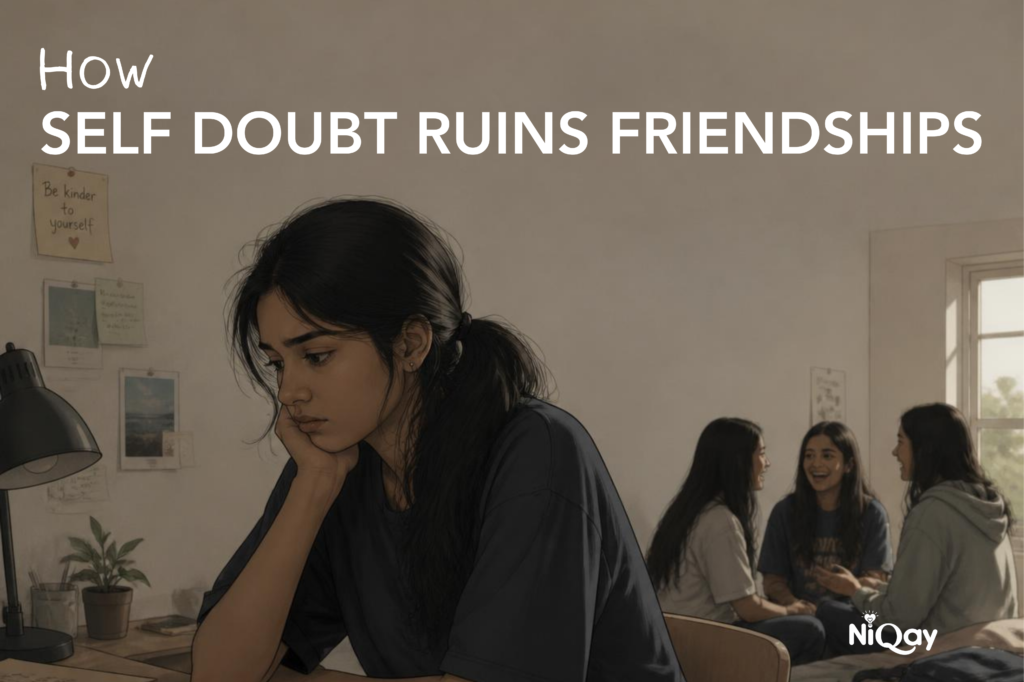
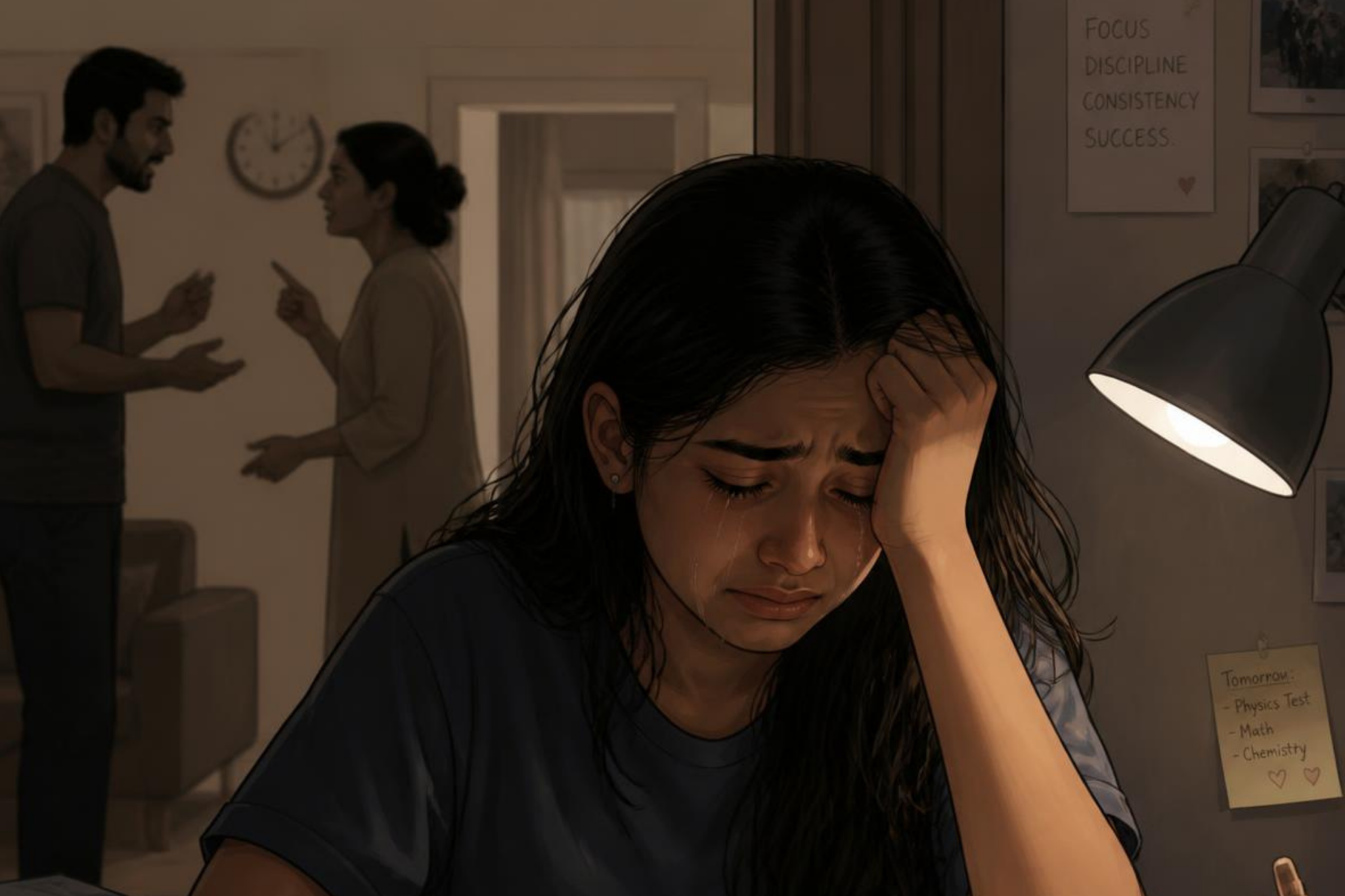
You’re sitting in class, but your mind is still stuck on what happened last night.
The teacher is in front of you talking, Your friends are laughing at something, you nod at them but your mind is completely blank and you don’t know whats happening.
you physically are present but mentally all lost.
This happens to many students, but they just tend to not accept.
Sometimes the hardest part of school isn’t the school, it isnt your bully or the teacher you think hates you.
It’s what you carry with you from home or the fight that happened last night.
Home stress never leaves you rather it rides along in your backpack, sits next to you in class, and shows up in your grades, your friendships, and how you feel about yourself.
This blog is for anyone who has ever felt tired for reasons they couldn’t explain.
Let’s talk about what’s really going on.
How Home Stress Follows You to School
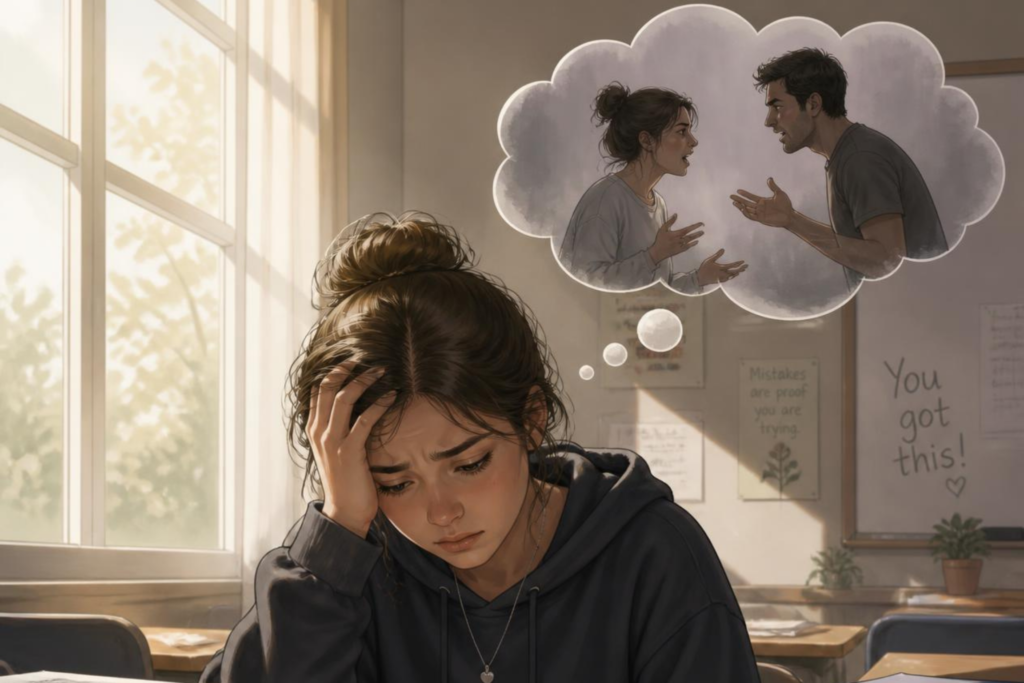
You’d think stress from home would just stay there But that never happens
and clearly, things become worse the next morning.
When things are feel heavy, your brain stays alert and your nervous system doesnt feel safe.
It’s keeps on scanning for problems, still replaying conversations, still bracing for the next thing to go wrong. That takes energy and emotions.
This shows up as:
- Difficulty concentrating, even during subjects you usually like
- Constant worry that pulls your attention away mid-sentence
- Emotional exhaustion that makes small tasks feel huge
- Feeling disconnected, like you’re watching your day happen instead of living it
None of this means something is wrong with you It just means that your brain is trying to protect you, even when there’s nothing to protect you from right now.
And no doubt that’s exhausting.
Common Causes of Stress at Home

Not every hard home is loud or dramatic.
Some of the toughest situations are quiet, which makes them easy to miss, even by the person living through them.
Home stress can look like:
- Parents who argue often, whether loudly or in cold silence
- Money that ruins every conversation and situation
- Expectations so high that nothing you do feels like enough
- Emotional neglect, where feelings get ignored.
- The silent treatment, which can sting bad
- Taking care of siblings or a parent when you’re still a kid yourself
- Divorce or separation that reshapes your whole routine
- A home where the mood changes so fast you’re always guessing
If any of these feel familiar, we feel YOU. But you don’t need bruises to prove something is hard.
Signs Home Stress Is Affecting You
Stress from home is always inevitable.
It sneaks in through spaces you didnt even know existed.
Watch for:
- Brain fog that makes reading the same paragraph three times feel normal
- Low motivation, even for things you used to enjoy
- Anxiety that shows up as a tight chest or racing thoughts
- Irritability over small things that wouldn’t normally bother you
- Poor sleep, or sleep that doesn’t actually leave you rested
- Crying without knowing exactly why
- A quiet loss of confidence in your own abilities
- Feeling “lazy,” when really you’re just overwhelmed
A lot of students get told they’re lazy or unmotivated when they’re actually carrying something heavy nobody else can see. There’s a real difference between not caring and not having anything left to give.
How Home Stress Lowers Your Grades

Stress physically changes how your brain functions.
Chronic stress makes it harder to hold information in your memory.
It shortens your attention span. It slows down decision-making and makes creative thinking feel almost impossible.
Even exams, which need calm focus, become harder when your nervous system is afraid.
So if your grades have slipped and you can’t figure out why, it might not be about intelligence or effort at all.
It might be about bandwidth.
A brain that’s busy managing stress at home has less room left for algebra or essay writing. Struggling to focus doesn’t mean you’re not capable.
It usually means you’re carrying more than your capabilities.
What Parents Often Don’t Realize
Kids notice everything. Even when parents believe they’re protecting their children from stress, most of it still gets through.
Children pick up on tone of voice before they understand the words.
They feel tension in a room the second they walk in.
They sense financial worry through small changes, like fewer outings or tighter moods.
They notice when they’re compared to a sibling or a classmate.
They remember criticism long after the person who said it has forgotten.
Trying to “protect” kids by hiding stress often backfires, because kids fill in the silence with their own worst guesses.
Open, age-appropriate honesty usually feels safer than a house full of things nobody talks about.
What Students Can Do

You can’t control everything happening at home. But you do have more influence over your own days than it might feel like right now.
Some things that genuinely help:
- Build small, steady routines, like a set homework time or a wind-down ritual before bed
- Journal your emotions instead of holding them in, even just a few lines a day
- Spend time in spaces that feel calm, whether that’s your room, a library, or a friend’s house
- Talk to a trusted adult, even if it feels awkward at first
- Ask for help without guilt, because needing support isn’t weakness
- Set realistic expectations for yourself during genuinely hard periods
Small routines matter more than they seem to.
When everything else feels unpredictable, a steady ten-minute habit can become the one part of your day that feels like yours. That sense of control, even in a small area, adds up over time.
What Parents Can Do
Parents shape the emotional temperature of a home more than they usually realize.
A few shifts can change a lot for a stressed-out kid.
Listening before jumping to advice makes children feel heard instead of managed.
Avoiding arguments in front of kids, when possible, protects their sense of safety.
Validating feelings instead of brushing them off teaches kids that emotions are allowed.
Celebrating effort, not just results, takes pressure off perfection. And creating space for honest conversations, without judgment, builds trust that lasts far beyond the teenage years.
None of this requires a perfect household. It just requires noticing.
Healing Doesn’t Require a Perfect Home
You cannot change your home nor can you rewrite it over night. You have to accept whats happening.
But you can build things around yourself that make the hard parts easier to carry: a support system, a few honest conversations, some coping skills that actually work for you.
Learning to name what you’re feeling, set boundaries, and communicate honestly doesn’t fix a difficult home.
But it does change how much power that difficulty has over your day-to-day life.
Healing doesn’t wait for a perfect environment.
It starts with small, steady choices, made even when things around you are still messy.
The Last Line
A quiet home isn’t a place where nobody shouts but a place where nobody shouts but a place where everybody is considerate.
It’s one where a kid feels emotionally safe. When students stop spending all their energy in just surviving their environment, they not just thrive academically but try themselves to improve.
If this article felt familiar, that says something important: what you’re feeling is real, and it’s worth taking seriously.
Exploring your emotions through creative expression or connecting with others who get it can be a genuine first step.
Niqay’s community and workshops exist for exactly this reason, to give students a space where these conversations aren’t awkward or rushed.
FAQs
Can family stress affect a student’s grades?
Yes. Chronic stress affects memory, focus, and decision-making, all of which directly impact academic performance.
Why can’t I focus because of problems at home?
Your brain stays alert to stress even when you’re not physically at home, which uses up mental energy needed for concentration.
How does a toxic home environment affect teenagers?
It can lead to anxiety, low confidence, poor sleep, and difficulty forming stable relationships, along with academic struggles.
What are signs that stress is affecting a student’s mental health?
Look for brain fog, irritability, low motivation, trouble sleeping, and sudden emotional outbursts or withdrawal.
How can parents reduce stress at home for their children?
Listening without judgment, validating feelings, and avoiding conflict in front of kids all help create a calmer environment.