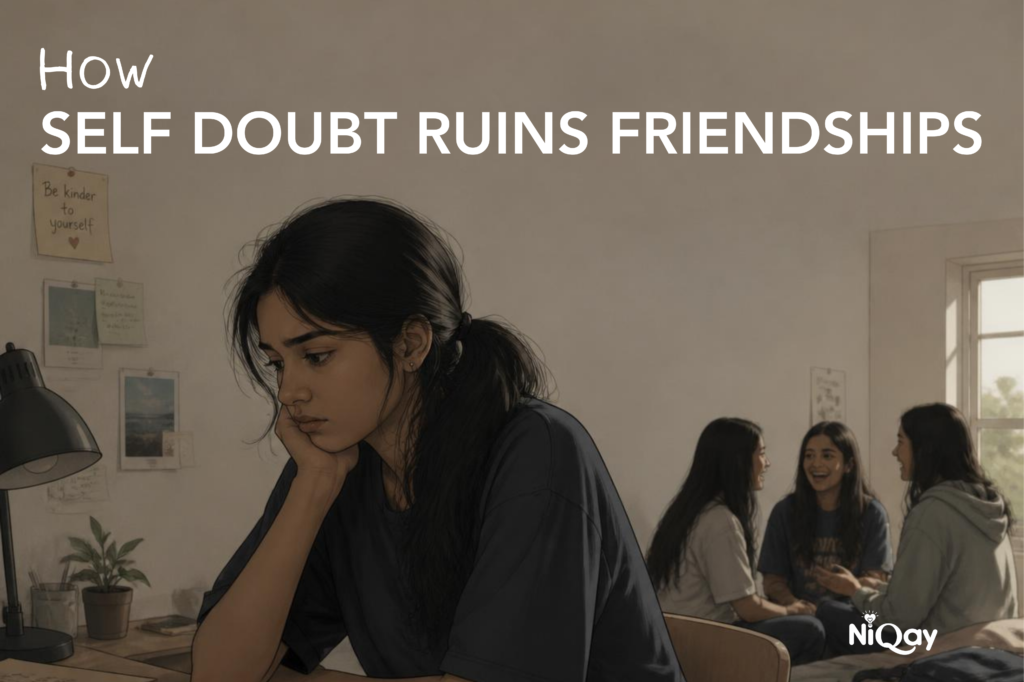

The loss of a friend can be like the loss of a part of your everyday life.
The person you use to text in the morning! The person who was gracious enough to reserve your place at lunch.
The one who knew your family drama, your crush history, your worst habits, and stayed anyway.
But There are inevitable times when friendships fails in the teenage world, and it is never discussed in the same way.
breakups happen to almost every teenager at some point, but nobody seems to talk much about it.
No one makes movies about the best friend that stopped talking. No one sings about the group chat you were put out of, None talks about the friends that really were never your friend.
But the pain, it is real, and it needs to be addressed.
This blog discusses what causes friendships to fail, how to know if there’s a friendship you want to save, how to sit with the hurt without devouring it, and how to actually proceed.
Not with false optimism but with a solution that actually works!
Why Do Friendships Break or Fall Apart?

Friendships rarely end because of a single moment. Usually its a series of moments stacking up and they all burst out on a single day.
Understanding why it happened is often the first step toward feeling less confused about the whole thing.
Here are some of the most common reasons friendships break down:
- Growing apart and changing priorities: one of you gets into a new hobby, a new friend group, or a new version of yourself, and the old connection just does not fit the same way anymore.
- Miscommunication and unresolved conflicts: small annoyances pile up because nobody says anything, until one of you finally explodes over something that seems small on the surface.
- Betrayal and broken trust : a secret got shared, a boyfriend or girlfriend got involved, or someone talked behind the other’s back.
- One-sided friendships and unmet expectations: one person is always the one texting first, planning the hangouts, and checking in, while the other barely shows up.
- Toxic behaviour, jealousy, or constant criticism: a friend who makes you feel small, competes with you instead of supporting you, or picks at your choices.
- Ghosting and sudden distance; someone just stops replying, stops inviting, and offers no explanation at all.
Some friendships end loudly, with a fight nobody forgets.
Others end so quietly that you only notice months later that you have not spoken in weeks.
Both are valid forms of loss, and both deserve time to process instead of being brushed off as “not a big deal.”
Should You Fix the Friendship or Let It Go?

This is typically the most challenging question.
Send that one text to fix it or do you just want to say that this chapter is over?
Here is no one right answer, but there are means to determine what works for you.
Firstly, you need to consider what really happened to make the friendship fail.
Was it a certain battle, a gradual drift or something you’ve had on your mind for a while but never spoke up about? T
he next decision becomes a lot easier when there is a reason involved. It’s often worth reaching out to mend a friendship if: You both still care about each other?
It wasn’t a trend of being disrespectful, it was a misunderstanding.
You can visualize an open dialogue without it becoming another altercation.
This person has been present whenever you needed them before and it doesn’t seem like it’s happening now.
But when the friendship has been characterised by repeated disrespect, constant one-sidedness, or feeling diminished more often than empowered, perhaps it’s a good idea to draw the line or simply walk away.
However, if you have been feeling depleted by a friendship over a period of time, the cause of this depleting is information, not weakness.
An honest conversation can help when both parties are willing to take the time to listen, not just wait for the other to speak up for themselves. If you choose to contact us, be brief.
Use the following structure to express what you felt, what you noticed and what you are hoping for without accusations: The responsibility you need to take is also important, but just for you.
Perhaps you were distant at a difficult time, or you upset someone with your words. Own that.
Don’t however accept responsibility for another’s disrespect, dishonesty or lack of communication.
This imbalance is the type of pattern that should be regarded in any relationship, and we discuss it further in this guide to emotional intelligence for teens.
How to Deal With the Pain of a Broken Friendship
It is okay that it hurts when we lose someone we loved and are friends with.
It is a section about coping with the difficult stuff without denying there is any.
Allow yourself to feel the loss of the friendship as you would feel the loss of any other friendship.
You’re not making things up. You lost someone who mattered, it doesn’t just come down to that, it’s a real emotion.
There are some things that actually facilitate this stage: Discuss it with a trusted person, such as a parent, sibling, teacher or other friend rather than in your head.
Write down whatever you are feeling in any way you can, even if it’s very messy, and put it down on paper so you can get it out of your head. Set a time limit rather than a hurry-up recovery.
Sick people don’t get better when they’re told to.
Don’t follow them on social media all the time because it will only exacerbate the pain, not heal it, when they see their new hangout or new best friend.
Also it helps to prevent the endless cycle of rehashing conversations and looking for a moment when things “went wrong.
It is rare that overthinking provides new answers!
It only slips the pain around and around. If a thought is bopping around in your head at night, write it down once, close the book and tell yourself that you wrote it today and you let it go.
How to Move On After Losing a Friend

Forgetting the friendship doesn’t mean moving on. It involves teaching them how to create a life without that one person’s presence.
First, accept the fact that the friendship might actually have come to an end, even if there wasn’t a formal goodbye. Sometimes love stories don’t have a big ending.
They simply fade into the background of your past and that is okay. It’s more important to find closure than it is for the other person to give it to you.
Sometimes, the answer you are expecting does not arrive and waiting for it leaves you waiting. You may choose to call it the end of this chapter if you want to.
Develop a new friendship where that friendship is not the focus.
If they used to be a part of lunch, take a different seat at lunch, join a club or just be alone for a little while.
Reconnect to hobbies you may have neglected during the time you were spending on that friendship.
Take some time, little by little, to allow new friendships to emerge. It doesn’t need to be immediate and it’s not a problem if the first few times it is a bit uncomfortable.
Take lessons from the past, but don’t become complacent that others will do as well.
A broken friendship is not all future friendships are a risk.
It simply means you just know more what you need and what you will not tolerate.
What a Broken Friendship Can Teach You About Healthy Relationships
All tough friendships have a lesson for them, even when they don’t think they do.
After the initial pain has subsided, it is easier to see what this experience is teaching you about relationship in general. Communication is frequently the most important lesson!
There is so much friendship pain that has never been verbalized, never been tested, never been confessed.
Boundaries are made more apparent as well.
You become aware when a friendship calls for more than you are willing to give, or when you’ve been disregarding your own boundaries to make someone else feel good.
A silent teaching moment is to encourage the understanding of the importance of teamwork. A friendship in which one person is trying is not actually a friendship, it is a habit.
Once you’ve seen one that is broken, it will be much easier to tell that difference between the two.
You begin to grasp your own friendship requirements and what you dislike about friends.
You may now realize you need someone who checks in first at times, or someone that doesn’t “go away” when things are super busy. This self-awareness will be transferred from friendships into all future relationships.
The Last Line
Grieving a friendship is valid, even if nobody else seems to treat it as a big deal.
You are allowed to miss someone who is no longer around, even if the friendship ended for good reasons.
Letting go does not erase the memories, the inside jokes, or the moments that made that friendship real while it lasted. Those still happened. They still counted.
What matters going forward is choosing relationships that offer mutual respect, honesty, and emotional safety, the kind of friendship where you do not have to shrink yourself to be liked.
If you are figuring out how to build that kind of confidence and self-awareness, Niqay’s student workshops are built around exactly these skills, and you are always welcome to talk it through with others going through the same.